Elevating Typography with Islamic Heritage: The Sahur Display Font
In the world of graphic design and digital typography, finding a typeface that genuinely communicates cultural depth without sacrificing aesthetic appeal is a rare discovery. Designers often struggle to bridge the gap between modern functionality and traditional artistry, especially when working on projects that require a specific cultural resonance. This is where Sahur steps in as a transformative tool for creatives. It is not merely a collection of characters; it is a beautifully crafted Islamic display font that serves as a conduit for heritage, bringing the intricate elegance of Islamic motifs directly into contemporary visual communication.
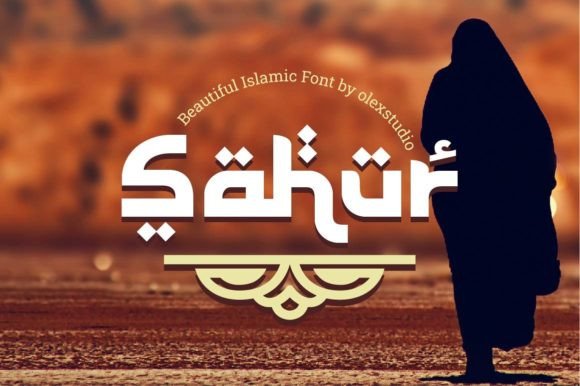
The essence of Sahur lies in its unique structural philosophy. Unlike standard fonts where the focus is solely on the legibility of the letterform itself, this typeface introduces a layered dimension to typography. It features intricate Islamic motifs elegantly positioned above each letter, creating a visual rhythm that mimics the ornate details found in historical architecture and manuscript illumination. For designers looking to add a touch of Islamic art and culture to any written text, this font offers an immediate and impactful solution. It transforms simple headlines into artistic statements, making it ideal for decorative purposes, calligraphy-inspired layouts, or broader artistic projects that demand a sense of reverence and style.
The Artistry Behind the Letterforms
When you examine Sahur closely, you begin to appreciate the meticulous attention to detail that went into its creation. The font does not simply slap a pattern on top of a standard serif or sans-serif base; rather, the motifs are integrated into the DNA of the typeface. Each character acts as a pedestal for the ornamentation above it, ensuring that the weight and balance of the text remain stable while the decorative elements soar. This design choice reflects the core principles of Islamic geometric art, where repetition, symmetry, and infinite patterns symbolize the unity of creation.
With its ornate and stylish design, Sahur brings the essence of Islamic heritage and aesthetics to your written expressions in a way that feels authentic rather than pasted on. The motifs often draw inspiration from arabesque patterns, floral vines, and geometric tessellations that have adorned mosques and palaces for centuries. By digitizing these elements and pairing them with robust letterforms, the font allows users to evoke a sense of timelessness. Whether used for a single word or a full sentence, the visual texture created by the overhead motifs adds a layer of sophistication that plain text simply cannot achieve.
Practical Applications in Modern Design Workflows
One might assume that such a highly decorative font is limited to niche uses, but Sahur fits surprisingly well into a variety of modern workflows. Its primary strength is in display settings—headlines, logos, posters, and packaging—where the goal is to capture attention and convey a specific mood immediately. For instance, in the branding industry, a company specializing in halal products, Islamic finance, or cultural tourism can utilize Sahur to instantly signal their identity and values to their target audience. The font acts as a visual shorthand for quality, tradition, and respect.
Consider the scenario of designing an invitation for a wedding or a religious gathering. Traditional invitations often rely on heavy imagery or complex layouts to convey festivity. However, by using Sahur for the names of the couple or the event title, the designer can achieve a similar level of grandeur with typographic simplicity. The intricate motifs above the letters provide the necessary decoration, allowing the rest of the layout to remain clean and breathable. This balance is crucial in modern design, where whitespace is just as important as the content itself.
Furthermore, the font is an excellent resource for social media graphics and digital marketing campaigns centered around cultural holidays like Ramadan or Eid. In a fast-paced digital environment, visuals need to stop the scroll. A post featuring a quote or a greeting written in Sahur stands out against the sea of generic sans-serif texts common on platforms like Instagram and Twitter. The cultural specificity of the font creates an emotional connection with viewers who recognize and appreciate the artistic heritage it represents.
Enhancing Cultural Narratives Through Typography
Beyond its aesthetic utility, Sahur plays a significant role in preserving and promoting cultural narratives. In an increasingly globalized design landscape, there is a growing demand for diverse voices and visual languages. Many designers from Islamic backgrounds, or those working on projects related to the Muslim world, often find themselves forced to adapt Western-centric fonts that do not quite fit the tone of their message. Sahur fills this void by offering a typeface that is inherently rooted in Islamic aesthetics yet fully compatible with the Latin alphabet.
This compatibility is a key feature. It allows the font to be used in bilingual contexts or in regions where English is the primary language of communication but the cultural context is Islamic. For example, a museum exhibit showcasing Islamic art can use Sahur for its English signage and captions, creating a cohesive visual theme that ties the text to the artifacts on display. The font becomes part of the storytelling, reinforcing the subject matter through its very form.
Moreover, the font encourages experimentation in artistic projects. Calligraphers and digital artists can use Sahur as a base for further manipulation, blending it with hand-drawn elements or integrating it into complex compositions. Because the motifs are already present, the artist can focus on color theory, composition, and lighting without needing to manually draw intricate patterns for every letter. This efficiency does not detract from the artistic value; instead, it empowers creators to produce high-quality work more rapidly.
Choosing the Right Context for Sahur
While Sahur is undeniably beautiful, understanding when and how to use it is essential for maximizing its impact. As a display font, it is best reserved for larger sizes where the details of the motifs can be clearly seen. Using it for body text or small captions might result in a loss of clarity, as the intricate lines above the letters could blur together at smaller resolutions. Therefore, it is recommended to pair Sahur with a clean, neutral sans-serif or serif font for the main body of the text. This contrast ensures readability while allowing the display font to shine as the star of the show.
Color selection also plays a pivotal role in how Sahur is perceived. Given its ornate nature, it pairs exceptionally well with rich, deep colors like emerald green, navy blue, gold, and burgundy—hues traditionally associated with Islamic art and luxury. However, it can also be effective in monochromatic schemes, where the interplay of light and shadow highlights the three-dimensional feel of the motifs. Designers should consider the psychological impact of color alongside the font's inherent style to create a harmonious final product.
Another consideration is the emotional tone of the project. Sahur carries a sense of dignity, elegance, and spirituality. It may not be the best choice for a playful, casual, or urgent message. Instead, it excels in contexts that require a thoughtful, respectful, or celebratory approach. Whether it is a book cover for a historical novel, a poster for a cultural festival, or a logo for a boutique hotel in the Middle East, the font sets a distinct mood that aligns with themes of heritage and refinement.
The Future of Culturally Rooted Typography
The emergence of fonts like Sahur signals a positive shift in the typography industry. It demonstrates that there is a viable market and a creative appetite for typefaces that celebrate specific cultural identities without compromising on modern design standards. As more designers embrace tools that allow them to express their heritage authentically, we can expect to see a richer, more diverse visual landscape in advertising, publishing, and digital media.
For the individual creator, adopting Sahur means gaining access to a versatile asset that can elevate the perceived value of their work. It allows for the creation of designs that feel curated and intentional, rather than generic. In a world where content is abundant, the ability to stand out through meaningful aesthetics is a powerful advantage. By integrating the intricate Islamic motifs of Sahur into their projects, designers are not just choosing a font; they are making a statement about the importance of culture, history, and art in everyday communication.
Ultimately, the beauty of Sahur is that it invites the viewer to pause and look closer. In an era of rapid scrolling and fleeting attention spans, a typeface that commands such quiet observation is a valuable tool. It reminds us that文字 (text) is not just a vehicle for information, but a canvas for art. Whether you are a seasoned graphic designer, a hobbyist calligrapher, or a brand manager looking to refresh your visual identity, exploring the possibilities of Sahur can open new doors for creative expression and cultural connection.